

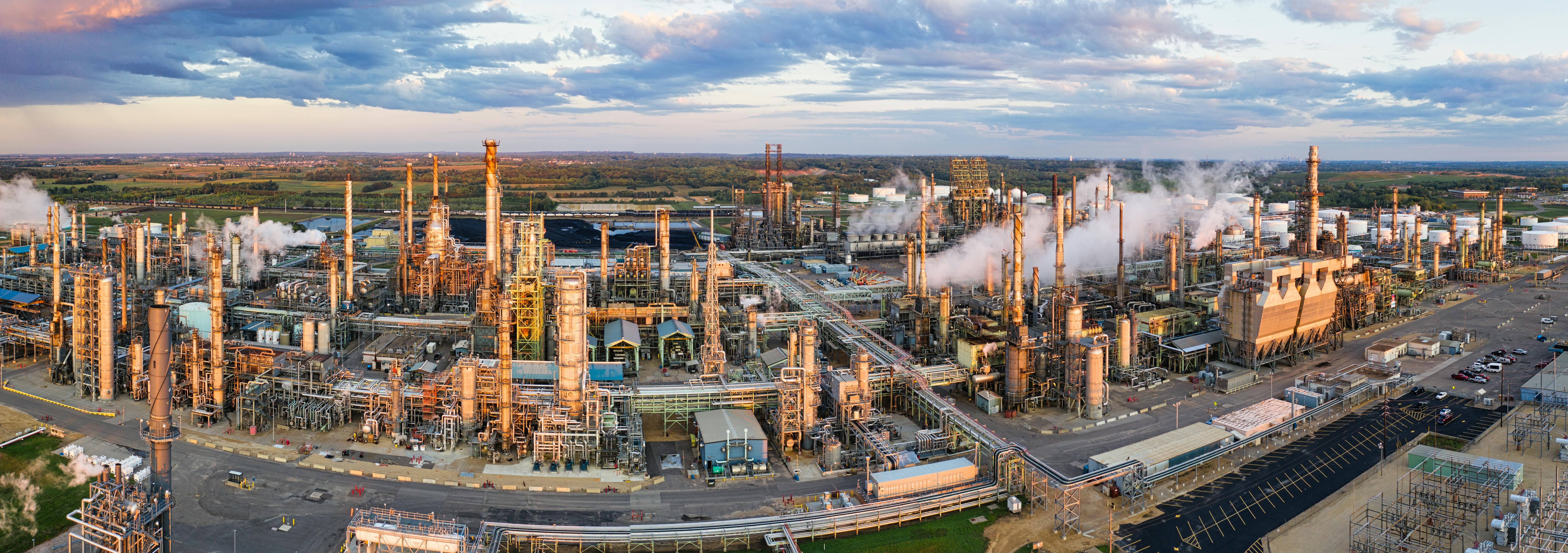

AI Anomaly Detection Oilfield Equipment Needs Before It Breaks Down
The hard truth: A single failed triplex mud pump in the Delaware Basin can cost you $18,000 per hour in spread rate and lost drilling time. By the time the pressure gauge drops and the company man calls, the damage is done. You are not fixing the pump. You are paying for the aftermath.
The Core Operational Breakdown: Why Equipment Fails on Your Watch
Every oilfield operator knows the rhythm of failure. It starts with a subtle vibration. A slight temperature rise on the packing. A pressure fluctuation that does not look right on the doghouse screen. Then, at 2:00 AM, the unit quits. The toolpusher wakes you with a phone call that ruins your sleep and your monthly P&L.
The problem is not that equipment fails. The problem is that you find out about the failure after it happens. You are managing breakdowns, not preventing them. This is where AI anomaly detection oilfield equipment changes the game. It does not predict the future with magic. It learns the normal heartbeat of your iron and flags the first whisper of trouble, hours or days before the catastrophic event.
Consider the data you already have. Your sensors on the top drive, the wireline unit, the frac manifold, and the vacuum truck are generating thousands of data points per second. Most of that data is ignored. It sits on a server or in a cloud bucket, never analyzed. Anomaly detection systems ingest that data, build a baseline of normal operating parameters, and then watch for deviations that a human eye would miss.
You have seen the reports. Vibration analysis on rotating equipment catches bearing wear weeks before failure. Thermal imaging on electrical panels catches hot spots before they arc. But these are periodic checks. They happen weekly or monthly. In between, you are blind. AI anomaly detection is continuous. It watches every stroke, every rotation, every pressure cycle, every single second of the day.
The Real Financial Drain: Show Me the Math
Let me give you concrete arithmetic that your CFO will understand. Non-productive time, or NPT, is the silent killer of oilfield margins. Industry benchmarks show that unplanned equipment failures account for 20 to 30 percent of total NPT on a typical drilling or completion operation.
Take a standard frac crew in the Midland Basin. The spread rate is $1.2 million per day. That is $50,000 per hour. If a frac pump goes down and you lose 45 minutes to swap it out and repressurize, that is $37,500 in pure spread cost. Now multiply that by the 15 to 20 pump failures you might see in a single month across your fleet. You are bleeding $750,000 a month in avoidable downtime.
Do the math on a swab rig in the Bakken:
- Average day rate for a swab rig: $8,500 per day
- One unexpected engine failure: 6 hours of downtime
- Lost revenue: $2,125
- Emergency parts and service call: $4,800
- Missed production target for the well owner: lost revenue you cannot bill
Total impact of one small failure: $6,925. And this is a small rig. A top drive failure on a deep Haynesville well can easily exceed $100,000 when you count the fishing job and the stuck pipe that follows.
The return on investment for anomaly detection is not theoretical. If you run a fleet of 20 frac pumps and you prevent just one major failure per pump per year, at an average cost of $25,000 per failure, you save $500,000 annually. The software costs a fraction of that. The math works.
Why Generic Solutions and Spreadsheets Fail in the Field
Many operators try to solve this with spreadsheets. They have a maintenance log. They track engine hours. They schedule oil changes and greasing intervals. This is preventive maintenance, and it is necessary. But it is not sufficient.
Preventive maintenance follows a fixed schedule. It assumes that equipment wears at a uniform rate. In the oilfield, that assumption is false. A mud pump running through the abrasive shale of the Eagle Ford wears differently than the same pump running in the softer formations of the Permian. A wireline unit operating in 110 degree West Texas heat behaves differently than one operating in a North Dakota winter.
Spreadsheets cannot detect the subtle change in vibration signature that indicates a cracked piston. They cannot notice that the hydraulic fluid temperature on your frac manifold is creeping up 2 degrees per day over a two week period. They cannot correlate the increased amperage draw on the top drive motor with a developing gearbox issue.
Generic industrial monitoring solutions fail for a different reason. They are built for factories with clean, consistent environments. They do not understand the chaos of a drilling rig or a wellsite. They trigger false alarms constantly because they do not understand that a mud pump running at 80 strokes per minute has a different normal vibration pattern than one running at 120 strokes per minute.
What you need is a system trained on oilfield equipment. It must understand the difference between a normal pressure spike during a pump change and the slow pressure decay that indicates a washout. It must know that a vacuum truck's PTO engages differently at 6:00 AM in January than at 2:00 PM in July. This domain specific training is what separates useful AI from expensive noise.
Step-by-Step Operational Framework: How to Implement AI Anomaly Detection Oilfield Equipment
You cannot just buy software and expect results. You need a framework. Here is the process that works across the Permian, the Bakken, and the Eagle Ford.
Step 1: Inventory Your Critical Equipment and Existing Sensors
Start with the equipment that causes the most costly downtime. For most operators, this is the triplex mud pump, the top drive, the frac pump, and the wireline unit. Do not try to monitor everything at once. Pick the top five asset types that keep you awake at night.
Audit what sensors you already have. Most modern equipment has a PLC or an engine control module that is already collecting pressure, temperature, flow, and vibration data. You do not need to install new sensors on everything. You need to access the data that is already there and currently being discarded.
Step 2: Establish a Baseline of Normal Operation
The AI needs to learn what normal looks like for each specific piece of equipment. A 2000 horsepower frac pump running at 95% load has a different vibration pattern than one running at 60% load. The system needs to see your equipment through multiple cycles, multiple shifts, and multiple weather conditions before it can accurately flag anomalies.
This baseline period typically takes two to four weeks. Do not rush it. The quality of your anomaly detection depends entirely on the quality of your baseline.
Step 3: Define the Alert Thresholds and Response Protocol
This is where you decide how aggressive your alerts will be. Too sensitive and you get alert fatigue. The crew will ignore the warnings. Not sensitive enough and you miss the early signs of failure.
Work with your senior mechanics and your most experienced toolpushers. They know the equipment. They can tell you what deviation is concerning and what is just normal noise. Set up a tiered alert system. A yellow alert goes to the field supervisor. A red alert goes to the dispatcher and the office. A critical alert triggers an automatic call to the operations manager.
Step 4: Integrate with Your Dispatch and Maintenance Workflow
An alert is useless if no one acts on it. The anomaly detection system must feed directly into your maintenance ticketing system and your dispatch board. When the system flags a developing issue on a frac pump in the Delaware Basin, your dispatcher needs to see that alert and schedule a proactive maintenance window. This is where the integration with your existing field ticketing and billing workflow matters.
Step 5: Review and Refine Monthly
AI is not a set and forget tool. Review the alerts that were generated. Which ones led to actual failures? Which ones were false positives? Use this data to refine your thresholds and improve the system's accuracy. After three months, the system will be significantly better at predicting failures on your specific fleet than it was on day one.
Permian Field Case Study: Exact Metrics from a Midland Basin Operator
Let me walk you through a real scenario from a Midland Basin operator running a fleet of 12 frac pumps and 4 wireline units. They implemented an AI anomaly detection system in Q3 of last year. Here are the exact numbers from their first 90 days of operation.
In the first month, the system established baselines and generated a high number of false alerts. The crew was frustrated. The operations manager almost pulled the plug. But they persisted, and by the second month, the system had learned the equipment's rhythms.
In week six, the system flagged a subtle increase in discharge pressure variation on Pump 7. The variation was 3 percent above normal. A human operator would not have noticed it. The AI correlated this with a slight increase in vibration at the fluid end. The recommendation was to inspect the plunger and packing.
The crew performed the inspection during a scheduled maintenance window. They found a cracked plunger that was about to fail catastrophically. The repair cost $3,200 and took 2 hours. A catastrophic failure would have meant a blown fluid end, potential injury, and at least 12 hours of downtime.
The financial comparison:
- Proactive repair cost: $3,200 parts and labor
- Proactive downtime: 2 hours during scheduled maintenance
- Catastrophic failure cost: $18,000 for a new fluid end, $4,500 for emergency service, $50,000 in spread rate downtime (1 hour at $50,000 per hour)
- Total catastrophic cost: $72,500
- Net savings from one detection: $69,300
Over the full 90 days, the system flagged 14 potential issues. Of those, 11 were confirmed as real developing problems. The crew fixed all 11 during scheduled maintenance windows. They avoided an estimated $760,000 in unplanned downtime and emergency repair costs. The software subscription cost was $18,000 for the quarter. The return on investment was 42 to 1.
This operator also saw a secondary benefit. Because they were not dealing with emergency failures, their invoicing became more predictable. They could close out tickets faster and get paid faster. The reduction in chaos in the field office was palpable. The dispatcher stopped spending hours on the phone arranging emergency parts deliveries and started focusing on optimizing crew schedules.
Implementation Checklist for Supervisors and Office Dispatch
You need a practical checklist to get this done. Here is what you need to do, in order, to deploy AI anomaly detection across your operation.
For the Field Supervisor
- Identify your top 5 most critical assets by downtime cost, not by replacement value.
- Verify that sensors on those assets are calibrated and reporting correctly.
- Work with the software vendor to establish the baseline period. Plan for 2 to 4 weeks of data collection.
- Train your crew on the alert levels. Make sure they understand that a yellow alert is a request for inspection, not a panic button.
- Create a standard operating procedure for responding to each alert level. Who inspects? What tools do they need? What is the escalation path?
- Schedule a weekly 30 minute review of all alerts generated in the past 7 days.
For the Office Dispatch and Operations Manager
- Ensure the anomaly detection system integrates with your dispatch board. Alerts should appear as work orders, not as separate emails.
- Set up the financial tracking. Log every alert, every inspection, and every prevented failure. You need this data to justify the investment.
- Coordinate with the maintenance team to schedule proactive repairs during natural downtime, such as between frac stages or during rig moves.
- Review the alert data monthly to identify recurring issues across your fleet. If three pumps show the same wear pattern, you have a systemic problem with your maintenance procedures or your parts quality.
- Use the data to negotiate better pricing with your parts suppliers. When you can predict failures, you can buy parts in bulk rather than paying emergency premiums.
The best results come when the field and the office work together. The field supervisor provides the domain knowledge about the equipment. The office provides the data analysis and the financial tracking. The AI system is the connective tissue that makes both sides more effective.
Frequently Asked Questions
Will AI anomaly detection replace my mechanics and field technicians?
No. The AI does not turn a wrench. It does not replace the judgment of an experienced mechanic who has been working on triplex pumps for 20 years. What the AI does is tell your mechanic where to look and when to look. It prioritizes the work. Instead of inspecting 20 pumps on a schedule, your mechanic inspects the 2 pumps that are showing early warning signs. Your best people become more valuable because they spend their time on problems that actually exist.
What is the minimum amount of data needed to start?
You need at least two weeks of continuous data from the equipment you want to monitor. The more data you have, the more accurate the baseline. If you have historical data stored from your existing sensors, that can accelerate the process. Most operators see useful results within 30 days of deployment.
How is this different from the vibration monitoring I already have on my compressors?
Traditional vibration monitoring looks at one parameter in isolation. It triggers an alarm when a single threshold is exceeded. AI anomaly detection looks at multiple parameters simultaneously. It correlates vibration with pressure, temperature, flow rate, and load. This multivariate analysis catches failure modes that single parameter monitoring misses. A pump might show normal vibration but abnormal correlation between pressure and temperature. That pattern indicates a different type of failure that a simple vibration alarm would never catch.
How long does it take to see a return on investment?
Most operators see a return within the first quarter of deployment. The exact timing depends on the age and condition of your fleet. Older equipment that is prone to failure will show results faster. The ROI calculator can give you a personalized estimate based on your fleet size, spread rates, and current NPT levels. You can access the ROI calculator to run your own numbers.
Clear Executive Takeaway
You are in the business of moving molecules from the ground to the market. Every hour of unplanned downtime is a direct hit to your revenue. You cannot afford to manage equipment failures reactively. The operators who survive the next downturn will be the ones who have mastered predictive maintenance.
AI anomaly detection oilfield equipment is not a luxury. It is a competitive necessity. The technology is mature. The implementation is straightforward. The financial returns are proven in the Permian, the Bakken, and every other major basin in North America.
You have two choices. You can keep waiting for the 2:00 AM phone call that tells you a pump is down. Or you can implement a system that tells you at 2:00 PM on a Tuesday that a pump needs attention, giving you time to fix it on your schedule, at your cost, without losing a single hour of production.
The choice is clear. Start with a pilot program on your most critical assets. Track the prevented failures. Measure the reduction in NPT. Calculate the savings. Then expand the program across your
To see how your team can eliminate this operational drag, explore the AI Anomaly Detection Oilfield Equipment Needs Before It Breaks Down solution on OpsFlo or schedule a diagnostic session with our operations engineering team.
No comments yet
Be the first to share your thoughts.
Leave a Reply
Comments are disabled on the shared-hosting build. If you want to respond to this article, email info@ops-flo.com and mention "AI Anomaly Detection Oilfield Equipment Needs Before It Breaks Down".
Contact OpsFlo