


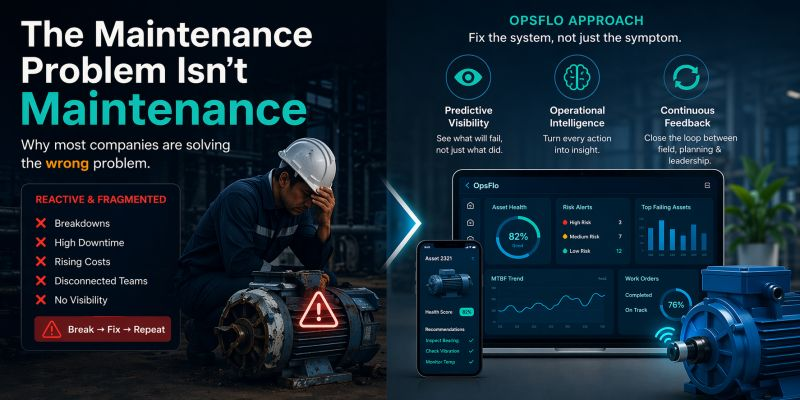
Field Service Software For Small Oilfield Company Budgets
The hard truth: You are losing money every single day you rely on paper tickets, text message approvals, and spreadsheet billing. This guide is for the owner, the operations manager, and the dispatcher who thinks they cannot afford modern systems. You can. The math proves it.
The Core Operational Breakdown: Why Small Operators Bleed Cash
Let us talk about the reality of a small oilfield service company. You run three vacuum trucks, two wireline units, or maybe a single swab rig. You have one dispatcher, two supervisors, and a part-time bookkeeper. Your company man at the wellsite is your customer. He signs a ticket, you invoice, and you wait 45 to 60 days for payment. That is the game.
The problem is not your equipment. Your iron is fine. The problem is the administrative drag that eats your margin. Every paper ticket that gets lost in a truck cab is revenue you never see. Every ticket with a signature that is illegible gets kicked back by the operator's accounts payable department. That is a 30 day delay on a $4,800 invoice for a frac water haul.
You need field service software for small oilfield company operations that handles the specific chaos of the Permian Basin, the Bakken, or the Eagle Ford. You need a system built for the dust, the poor cell signal, and the brutal reality of 24 hour dispatch cycles. Generic CRM software does not understand what a "ticket" is. It does not know the difference between a standby rate and a move rate. It does not know that the company man needs to approve digital signatures on an iPad before you can bill.
This guide walks you through the operational breakdown, the real financial drain, and the exact implementation framework to get your field operations running lean. You will see the arithmetic. You will see the workflow. And you will see why the old ways are costing you a small fortune.
The Real Financial Drain: Show Me the Math
Let us stop talking about "efficiency" and start talking about dollars. Consider a typical small oilfield service company with 15 field crews. Each crew generates an average of 2.5 tickets per day. That is 37.5 tickets daily, or roughly 825 tickets per month if you run 22 days.
Industry data from operators like ConocoPhillips and Devon shows that manual ticket processing costs between $12 and $18 per ticket when you factor in data entry, error correction, and rework. Let us use $15 per ticket. Your monthly administrative cost for ticket processing is $12,375. That is $148,500 per year just to move paper.
Now factor in the error rate. The oil and gas industry averages a 12 to 15 percent first pass failure rate on manual tickets. That means 100 of your 825 tickets get rejected or sent back for clarification. The average rejected ticket takes 45 minutes of phone calls, emails, and rework to fix. At $50 per hour for a supervisor or office admin, that is $3,750 per month in pure rework labor. Add that to your processing cost and you are at $16,125 per month.
The Monthly Drain:
- Base ticket processing: 825 tickets x $15 = $12,375
- Rejected ticket rework: 100 tickets x 0.75 hours x $50 = $3,750
- Total manual processing burden: $16,125 per month
- Annualized: $193,500
That is not a rounding error. That is the cost of a full time field engineer or a second service rig.
But the biggest killer is Days Sales Outstanding (DSO). The average small oilfield service company carries a DSO of 55 to 65 days. Large operators pay on their terms, usually 45 days after invoice receipt. If your invoice arrives late because you waited for a paper ticket to be mailed or scanned, you add 10 to 15 days to that cycle.
Let us say your average monthly revenue is $450,000. Reducing DSO from 60 days to 45 days frees up $225,000 in working capital. That is cash you can use to pay for diesel, replacement parts for your triplex mud pump, or a down payment on a new wireline unit. At a 10 percent cost of capital, that $225,000 is worth $22,500 per year to you.
The solution is not complicated. You need field service software for small oilfield company operations that captures the ticket at the wellsite, syncs it to the office, and submits it to the operator's portal (PIDX, OpenInvoice, or Cortex) the same day. Every day you cut from the billing cycle is cash in your checking account.
Why Generic Solutions and Spreadsheets Fail in the Field
I have seen operators try to run their service business on a combination of QuickBooks, Google Sheets, and a group text message thread. It works for about two months. Then you hire a second crew, or you get a job in the Delaware Basin that is 90 miles from the shop, and the whole system collapses.
Spreadsheets fail because they have no concept of real time. When your pumper finishes a job at 2:00 AM in the Haynesville, he writes the ticket on a carbon copy. That ticket sits in his glovebox until he drives back to the yard. That could be three days. The operator's company man has already moved to a different pad. He does not remember the job details. He questions the hours. He questions the water volume.
Generic field service software fails because it is built for HVAC technicians or cable installers. It does not handle the complexity of oilfield ticketing. It does not support multiple well names on a single ticket. It does not calculate the difference between rig move miles and loaded miles. It does not handle the "waiting on weather" or "waiting on location" status codes that your customers require.
Most critically, generic software does not integrate with the operator's billing portals. When you work for ExxonMobil or Chevron, they require you to submit invoices through their specific system. If your software cannot generate the correct XML file or PDF format, you are back to manual data entry. That defeats the entire purpose.
You need a system built for the oilfield. A system that understands that your crew might be in a dead zone for cell service and needs offline mode. A system that allows the company man to sign with a finger on a ruggedized tablet. A system that pushes the approved ticket straight to your billing department and then to the operator's portal.
Step by Step Operational Framework for Small Companies
Implementing the right system is not a technology project. It is an operational discipline project. Here is the framework that works for small companies with limited IT staff.
Step 1: Digitize the Ticket at the Point of Service
The field crew must capture the ticket data on a mobile device at the wellsite. This is non-negotiable. The pumper or the wireline operator enters the start time, end time, equipment used, and any remarks. The company man reviews the data on the screen and signs digitally. This happens before the crew leaves the location.
The old excuse is that the company man will not sign a tablet. That is outdated thinking. The company man is tired of chasing paper tickets too. He wants a clean digital record that he can forward to his own office. He wants to avoid the dispute that happens three weeks later when the paper ticket is illegible.
Step 2: Automate the Office Approval Workflow
When the ticket syncs to the office, it must flow through a pre-defined approval chain. The dispatcher checks the rates and the hours. The operations manager verifies the job against the work order. The billing clerk converts the approved ticket to an invoice. No one should be re-typing data. No one should be emailing PDFs back and forth for a signature.
Look for a platform that offers digital field ticketing with an audit trail. You need to know who changed what and when. If an operator disputes a ticket, you need to pull up the exact digital record with the timestamp and the GPS location of the crew.
Step 3: Submit Directly to Operator Portals
The final step is the invoice submission. Your software must generate the invoice in the format required by the operator. Whether it is PIDX, OpenInvoice, or Cortex, the submission must be electronic and traceable. This eliminates the "we never received it" excuse.
The goal is accelerated oilfield billing that gets your invoice in front of the operator's accounts payable team within 24 hours of job completion. When you submit fast, you get paid fast. It is that simple.
Permian Basin Case Study: Exact Metrics from a Small Operator
Let me give you a real world example from a frac water hauling company in the Permian Basin. This company ran 12 vacuum trucks and 4 frac tanks. They were doing roughly $380,000 per month in revenue. Their DSO was 58 days. Their ticket error rate was 14 percent.
They switched to a digital field ticketing system. The implementation took six days. They trained 16 drivers and 2 dispatchers. The total software cost was $1,100 per month. Here is what happened in the first 90 days.
The 90 Day Results:
- Ticket error rate dropped from 14% to 2% (rejected tickets fell from 115 per month to 16)
- Invoice submission time dropped from 6 days after job completion to 1 day
- DSO dropped from 58 days to 41 days
- Working capital freed up: $380,000 x (17/30) = $215,000
- Monthly rework labor savings: $4,950
- Monthly processing savings: $3,100
Net monthly benefit: approximately $8,050 in hard savings, plus $215,000 in cash that was previously trapped in receivables.
The owner of that company told me the software paid for itself in the first week. He was not exaggerating. The first invoice that got submitted and approved in 24 hours instead of 9 days paid for the entire year of software subscription.
This is not a fantasy. This is the arithmetic of moving from a paper based workflow to a digital one. The same math applies whether you are running a swab rig in the Bakken or a wireline unit in the Eagle Ford.
Implementation Checklist for Supervisors and Office Dispatch
You do not need a six month consulting engagement to implement this. You need a disciplined two week rollout. Here is the checklist.
Week 1: Setup and Configuration
- Map your current ticket workflow. Identify every handoff and every approval step.
- Define your service codes: hourly rate, standby rate, move rate, equipment rental, and materials.
- Set up your customer profiles with the correct billing portal requirements for each operator.
- Configure your approval chain. Decide who approves what. Keep it to two levels maximum.
- Load your equipment list. Every truck, every pump, every tank needs a unique identifier.
Week 2: Field Pilot and Training
- Select one crew or one district for the pilot. Do not roll out to everyone at once.
- Train the pilot crew on the mobile app. Focus on the ticket capture flow, not on the software features.
- Run parallel operations for three days. Capture tickets on paper and in the app. Compare the results.
- Review the error rate. Fix any configuration issues before you expand.
- Train the office staff on the approval workflow and the portal submission.
Week 3: Full Rollout
- Deploy to all crews. Provide a cheat sheet card for each truck cab.
- Set a hard deadline for paper tickets. After this date, paper tickets are not accepted for billing.
- Monitor the dashboard daily for the first two weeks. Watch for tickets stuck in the approval queue.
- Call every crew that has not submitted a digital ticket by 10:00 AM. Find out why.
The most important part of the rollout is the hard deadline. If you allow paper tickets to continue, your crews will default to the old habit. You must force the change. The first week will be painful. The second week will be normal. By the third week, your crews will refuse to go back to paper because they hate re-writing tickets in the rain.
Frequently Asked Questions
Q: Is this software really affordable for a company with only 5 or 6 trucks?
Yes. Most modern oilfield software platforms price per user or per truck, not as a percentage of revenue. A small company with 6 trucks can expect to pay between $500 and $1,500 per month for a full system. Compare that to the $4,000 to $6,000 per month you are losing in manual processing errors and rework. The software is not an expense. It is a profit center. Use the ROI calculator to run your specific numbers.
Q: What if my crews are not tech savvy?
The average pumper in the Permian Basin is 45 years old and has been doing this for 20 years. He is not afraid of technology. He is afraid of extra work. If the app is designed for field use with big buttons and offline capability, he will adopt it. The key is training. Spend two hours with each crew. Show them how the app saves them from re-writing tickets when the company man questions the paper copy. Once they see the benefit to themselves, adoption is fast.
Q: How does this handle the operator's specific billing portal requirements?
The system must be built for oilfield billing. It should support PIDX XML formats for the majors and direct CSV or PDF uploads for smaller operators. When you set up a customer, you define their portal type and their required fields. The system then formats the invoice automatically. You do not need to know the technical details. The software handles it.
Q: What happens when we are in a dead zone with no cell service?
A proper oilfield system works offline. The crew captures the ticket on the tablet or phone. The data is stored locally on the device. When the device reconnects to the network, the ticket syncs automatically. This is not a nice to have feature. It is a requirement for the Delaware Basin and the remote areas of the Bakken.
Clear Executive Takeaway
The oilfield service business is a margin game. You fight for every dollar on the rate sheet, and then you give a chunk of it back to administrative waste. Paper tickets get lost. Invoices get delayed. Disputes eat your time. This is not a technology problem. It is a cash flow problem.
You do not need enterprise software with a six figure price tag. You do not need a dedicated IT department. You need a tool that your dispatcher can learn in an afternoon and your pumper can use with gloves on. You need a tool that gets your invoice to the operator's accounts payable system the day the job is done, not the day the ticket finally makes it back to the shop.
The arithmetic is clear. If you process 500 tickets per month and your DSO is 55 days, you are leaving tens of thousands of dollars on the table every month. The fix is not expensive. The fix is not complicated. The fix is discipline and the right tool.
No comments yet
Be the first to share your thoughts.
Leave a Reply
Comments are disabled on the shared-hosting build. If you want to respond to this article, email info@ops-flo.com and mention "Field Service Software For Small Oilfield Company Budgets".
Contact OpsFlo