

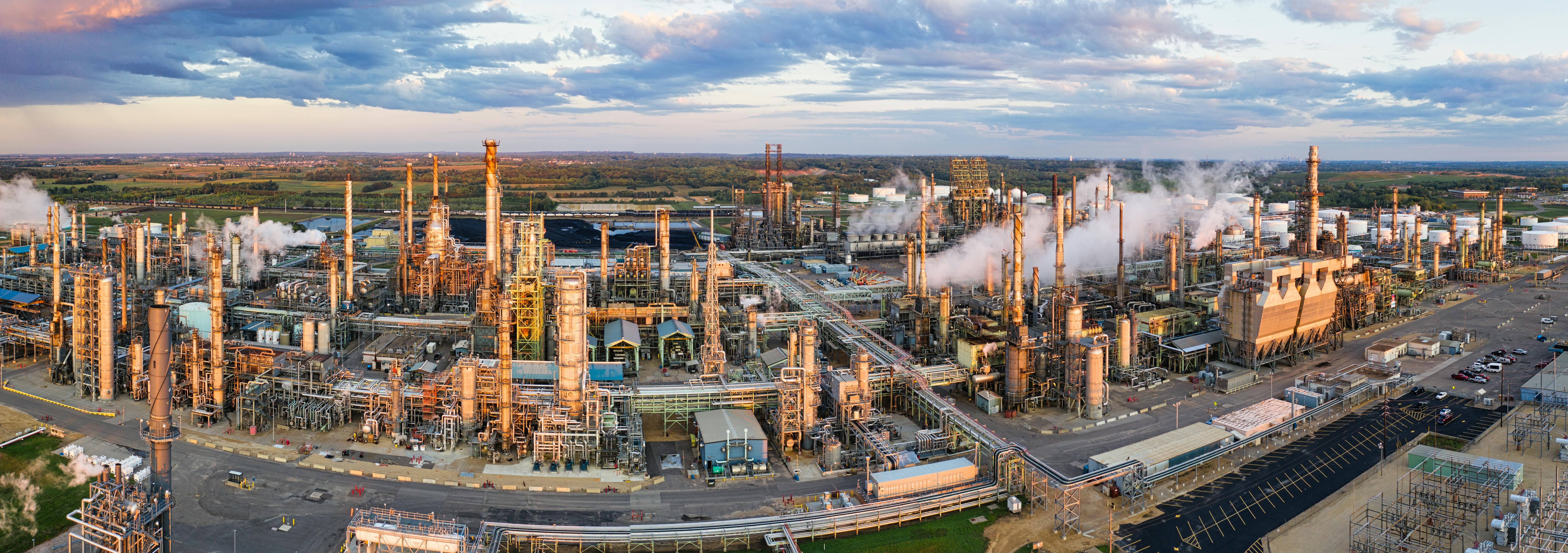

Predictive Maintenance Oil And Gas Equipment: From Reactive To Proactive
The hard truth: A single blown top drive seal in the Permian Delaware can cost you $18,000 per hour in spread rate charges. If the rig sits for 12 hours waiting on a replacement part, that is $216,000 down the hole. Not for repairs. For doing nothing.
The Core Operational Breakdown: Why You Are Still Fighting Fires
You are running a reactive operation. Most oilfield service companies are. The pumper calls dispatch at 2:00 AM because the triplex mud pump pressure dropped. The wireline unit dies halfway down the well in the Eagle Ford. The vacuum truck's PTO fails on the way to the disposal site. You scramble, you pay overtime, you burn diesel sending a mechanic 80 miles, and you lose a day of production.
This is the standard model. It is also the most expensive model you can run. The shift to predictive maintenance oil and gas equipment is not a technology fad. It is a financial survival strategy. When you predict a failure before it happens, you schedule the repair during planned downtime. You have the part in inventory. You have the mechanic on site. You lose zero production hours.
Consider the math on a frac fleet. A single frac pump can generate $30,000 to $50,000 per hour in revenue. When that pump goes down unexpectedly, the entire fleet stops. The crew stands by. The sand trucks queue up. The company man starts making phone calls. You are not just losing the revenue from one pump. You are losing the revenue from the entire spread. Predictive maintenance oil and gas equipment directly targets this catastrophic failure mode.
The difference between reactive and proactive is not about being smarter. It is about having data that tells you the future. Vibration analysis on rotating equipment, oil sampling for wear metals, thermal imaging on electrical panels, and pressure decay tests on seals. These are not new sciences. The problem is that the data lives in spreadsheets, in logbooks, or in the head of a veteran mechanic who is about to retire.
The Real Financial Drain: Show Me the Numbers
Let us put hard numbers on the reactive model. Industry data from the Department of Energy and major operators suggests unplanned downtime costs the oil and gas sector roughly $50 billion annually. For a mid-sized oilfield service company running 20 frac pumps, 15 wireline units, and 40 vacuum trucks, the annual cost of reactive maintenance is staggering.
Assume your average spread rate is $25,000 per hour. Assume you experience 200 unplanned downtime events per year across your fleet. Assume the average event lasts 6 hours. That is 1,200 hours of lost production. At $25,000 per hour, you just lost $30 million in gross revenue. Not profit. Revenue. Your profit margin on that revenue might be 15 percent. So you lost $4.5 million in net profit because you were not watching the vibration data on a bearing that has a known 5,000-hour lifespan.
The Reactive Tax:
200 events x 6 hours each = 1,200 NPT hours
1,200 hours x $25,000 spread rate = $30,000,000 lost revenue
15% net margin = $4,500,000 lost profit
Add $350,000 in emergency parts shipping (air freight a 400-pound pump piston overnight from Houston to Midland)
Add $180,000 in overtime labor for after-hours repair crews
Total annual cost of being reactive: $5,030,000
Now look at the predictive model. You implement a system that monitors equipment health in real time. You get a warning 72 hours before the bearing fails. You schedule the swap during a crew change. The pump is down for 2 hours of planned maintenance instead of 6 hours of emergency repair. Your NPT hours drop by 70 percent. You just saved $3.5 million in profit. The cost of the predictive maintenance software and sensors is a fraction of that number.
There is also the secondary cost that nobody tracks. When equipment fails in the field, it damages your reputation with the operator. The company man remembers that your wireline unit shut down for 4 hours on his pad in the Midland Basin. Next time he is bidding jobs, he gives a slight edge to your competitor. That lost future revenue is invisible on your P&L, but it is real. Predictive maintenance oil and gas equipment protects your relationship with the operator by keeping your promises.
Why Generic Solutions and Spreadsheets Fail in the Field
You have tried the generic CMMS system. You have a spreadsheet tracking engine hours. You have a whiteboard in the shop with sticky notes for upcoming service. And you are still getting calls at 3:00 AM. Why?
Spreadsheets are static. They tell you that Pump 3 has 4,200 hours since last service. They do not tell you that Pump 3 is running at 95 degrees above normal operating temperature because the coolant flow is restricted. They do not tell you that the vibration signature on the power end has shifted into the danger zone. Spreadsheets track time. Predictive maintenance tracks condition. Time-based maintenance changes parts that are still good. Condition-based maintenance changes parts that are about to fail. The difference is the entire ballgame.
Generic CMMS systems are built for factories with stationary equipment. They assume your assets are bolted to the floor. You operate in the harsh reality of the Bakken in January, where hydraulic fluid turns to syrup. You operate in the Haynesville where the mud is heavy and the pressure is relentless. Your equipment moves from pad to pad. It gets bounced on trailers. It sits idle for weeks then runs 24/7 for a month. A factory CMMS cannot model this chaotic usage pattern.
The other failure is data entry. You ask your mechanics to log every service manually. They are exhausted after a 14-hour shift. They forget. They write illegibly. They skip the oil sample because the kit is in the truck that went back to the yard. The data quality degrades until the system is useless. Then you abandon it and go back to the whiteboard.
A proper predictive maintenance oil and gas equipment system automates the data collection. Sensors stream data continuously. Oil analysis results are uploaded via mobile app at the point of collection. The system does the math and tells you what needs attention. It does not rely on a tired mechanic remembering to type in a number. It works even when your people are busy doing their real jobs.
Step-by-Step Operational Framework: From Reactive to Proactive
Making the shift requires a clear plan. Here is the framework that works for oilfield service companies across the Permian, Eagle Ford, and beyond.
Step 1: Inventory Your Critical Assets
You cannot monitor everything at once. Start with the equipment that causes the most expensive downtime. For a frac company, that is the pumps and the blender. For a wireline company, it is the winch unit and the power pack. For a swab rig operator, it is the drawworks and the engine. For a vacuum truck fleet, it is the PTO and the pump. List your top 20 assets by revenue impact. These are your priority.
Step 2: Identify the Failure Precursors
Every piece of equipment gives warning signs before it fails. A mud pump bearing gets hot before it seizes. A frac pump fluid end develops micro-cracks that show up in pressure tests. A wireline drum brake wears thin and changes the stopping distance. A diesel engine's oil shows increasing iron particles before the rod bearing spins. Work with your mechanics to document what these precursors are for each asset class.
Step 3: Install the Right Sensors
You do not need to instrument every asset with $10,000 worth of sensors. Start with the basics. Vibration sensors on rotating equipment. Temperature probes on bearings and fluid ends. Pressure transducers on hydraulic systems. GPS and engine diagnostics on mobile equipment. The cost of a basic sensor package is $500 to $2,000 per asset. Compare that to the $25,000 per hour spread rate. The payback is immediate.
Step 4: Establish Baseline Thresholds
You need to know what normal looks like before you can detect abnormal. Run your equipment for two weeks while collecting data. Establish the baseline operating envelope for temperature, vibration, and pressure. Then set alerts at 80 percent of the danger threshold. This gives you time to plan the intervention.
Step 5: Integrate with Your Dispatch and Billing
The maintenance alert is useless if it does not reach the person who can act. The system must notify the field supervisor and the dispatcher simultaneously. The dispatcher can then schedule the repair during a gap in the schedule. The supervisor can verify the part is in stock. This integration is where most solutions fail. They give you a dashboard that nobody checks. You need alerts that go to the phone of the person on call.
A modern platform handles this workflow automatically. It tracks the condition of your assets, predicts failures, and routes the work order to the right person. It also connects to your digital field ticketing system so that the maintenance time is captured and billed correctly to the operator if it is chargeable. This closes the loop between maintenance and revenue.
Permian Field Case Study: Exact Metrics from a Real Operation
Consider a mid-sized frac sand logistics company operating 25 pneumatic trailers and 15 vacuum trucks in the Permian Delaware Basin. Their job is to move sand from the transload facility to the wellsite. Every hour a truck is down means a frac crew is waiting on sand. The spread rate for a frac crew in the Delaware is $40,000 per hour.
Before implementing predictive maintenance oil and gas equipment, this company experienced an average of 3 unplanned truck failures per week. Each failure averaged 4 hours of downtime. That is 12 hours of lost hauling per week. At $40,000 per hour of frac spread time, the cost was $480,000 per week in potential penalties and lost revenue.
The company installed vibration sensors on the PTO units and pneumatic blower bearings. They also started doing monthly oil analysis on the diesel engines. The system flagged a deteriorating bearing on Blower Unit 7 two weeks before it would have failed. The maintenance team replaced the bearing during a scheduled 6-hour maintenance window on a Sunday night. The truck was back in service Monday morning.
The Result:
Before: 3 failures/week x 4 hours = 12 NPT hours/week
After: 0.9 failures/week x 3 hours = 2.7 NPT hours/week
Reduction: 9.3 NPT hours saved per week
At $40,000/hour = $372,000 saved per week
Annualized: $19.3 million in avoided downtime
Cost of sensors and software: $48,000
Return on investment: 400x in the first year
The company also reduced their parts inventory by 22 percent. They no longer stocked emergency spares for every failure mode. They stocked the parts that the predictive system told them they would need. They stopped air-freighting parts from Houston. They started planning their parts purchases and getting volume discounts.
The side benefit was improved driver retention. Drivers were no longer stranded on the side of Highway 285 at 2:00 AM waiting for a tow truck. They finished their routes on time. They went home to their families. Turnover dropped from 35 percent annually to 18 percent. The cost of recruiting and training a new driver is $15,000. Saving 5 drivers per year is another $75,000 in avoided costs.
Implementation Checklist for Supervisors and Office Dispatch
You need a practical plan to get this done. Here is the checklist we recommend for any operation moving to predictive maintenance.
- Week 1: Identify your top 20 revenue-critical assets. Rank them by the cost of downtime. Assign an owner to each asset.
- Week 2: Document the known failure modes for each asset. Interview your senior mechanics. Capture their tribal knowledge before they retire.
- Week 3: Select the sensor package for each asset class. Start with vibration and temperature on rotating equipment. Add oil analysis for engines and pumps.
- Week 4: Install the sensors and establish baseline readings. Run the equipment normally for two weeks. Do not change your maintenance schedule yet.
- Week 5: Set alert thresholds at 80 percent of the danger zone. Configure alerts to go to the field supervisor and the dispatcher simultaneously.
- Week 6: Run a pilot on 5 assets. Measure the number of alerts, the accuracy of predictions, and the time saved. Adjust thresholds as needed.
- Week 8: Expand to the full fleet. Train all supervisors and mechanics on the new workflow. Emphasize that the system is a tool, not a replacement for their judgment.
- Ongoing: Review the prediction accuracy monthly. Track false positives and missed failures. Refine the algorithms based on your specific operating conditions.
The office dispatch team must be part of this process. They are the ones who see the schedule. They know when there is a gap in the calendar. When the system sends an alert, the dispatcher can slot the repair into the next available window. This coordination is the difference between planned maintenance and another emergency call.
You also need to connect maintenance data to your billing process. When you perform maintenance on a pump that is on a day-rate contract, you need to document the hours accurately. This is where accelerated oilfield billing becomes critical. You cannot bill for work you did not document. Predictive maintenance gives you a clean record of every intervention, which makes your billing more accurate and faster.
Frequently Asked Questions
How much does predictive maintenance oil and gas equipment cost to implement?
The cost varies by fleet size and asset complexity. A basic setup for a small fleet of 10 trucks costs $15,000 to $30,000 in sensors and software. A full implementation for a frac fleet with 20 pumps and all supporting equipment costs $100,000 to $250,000. The payback period is typically under 90 days. If you prevent just one major failure that would have cost you $250,000 in downtime, the system has paid for itself.
What is the difference between preventive and predictive maintenance?
Preventive maintenance is time-based. You change the oil every 500 hours or replace the belt every 6 months. Predictive maintenance is condition-based. You monitor the actual state of the equipment and intervene when the data says a failure is imminent. Preventive maintenance catches problems that follow a predictable timeline. Predictive maintenance catches problems that are random or accelerated by harsh conditions. In the oilfield, where equipment is abused daily, predictive is superior.
Can we use predictive maintenance on older equipment?
Yes. In fact, older equipment benefits the most. A 10-year-old frac pump has more wear and tear than a new one. It is more likely to fail. Adding sensors to older equipment gives you visibility into its true condition. You can decide whether to repair it, replace it, or run it until failure based on data, not guesswork. Many operators use predictive maintenance to justify capital expenditure on replacement equipment by showing the failure frequency of the old fleet.
How long does it take to see results?
You will see immediate results from the baseline data collection. Within the first month, you will identify at least one asset that is operating outside its normal envelope. Within 90 days, you will have prevented your first major failure. Within 6 months, the data will show a clear reduction in NPT hours. The financial impact is visible in your monthly P&L.
Clear Executive Takeaway
The oilfield has always been a reactive business. The pumper checks the gauge, sees a problem, and calls for help. That model worked when spreads were $5,000 per hour and competition was local. It does not work today. Spreads are $40,000 per hour. Operators demand 99 percent uptime. Your competitors are using data to predict failures and schedule maintenance during
To see how your team can eliminate this operational drag, explore the Predictive Maintenance Oil And Gas Equipment: From Reactive To Proactive solution on OpsFlo or schedule a diagnostic session with our operations engineering team.
No comments yet
Be the first to share your thoughts.
Leave a Reply
Comments are disabled on the shared-hosting build. If you want to respond to this article, email info@ops-flo.com and mention "Predictive Maintenance Oil And Gas Equipment: From Reactive To Proactive".
Contact OpsFlo