


Software For Oilfield Maintenance Contractors Who Bill By The Job
If you run an oilfield maintenance crew that bills by the job, you know the pain of the paper ticket. The truck rolls back to the yard at 2 AM. The supervisor squints at a grease-stained work order. The invoice goes out three weeks late. That is why you need software for oilfield maintenance contractors that treats every work order like a profit center, not an afterthought. This guide is for the operations executive, the field supervisor, and the owner who is tired of losing margin to administrative chaos. We will talk about real iron, real basins, and the exact numbers that keep you in business.
The Core Operational Breakdown: Why Job-Based Billing Breaks Without the Right Tools
Maintenance contracting in the Permian Delaware or the Bakken is not like selling a product. You sell a promise that a pump will run, a swab rig will pull, or a vacuum truck will show up on time. When you bill by the job, your revenue depends on three things: accurate capture of work performed, correct pricing per task, and fast approval from the company man or the pumper on site.
The problem is that most crews still run on a mix of handwritten tickets, text messages, and whiteboards in the dispatch office. A wireline unit finishes a plug-and-perf job in the Midland Basin. The operator representative signs a ticket that says "performed services." But that ticket does not list the specific charges for the frac manifold hookup, the wireline truck standby time, or the extra pressure control equipment rental. When the invoice reaches the operator's accounts payable, it gets kicked back for lack of detail. That is a 30 day delay on a $40,000 invoice.
The core breakdown is simple. You have field operations generating data in real time. You have office dispatch trying to interpret that data hours later. And you have an operator's back office demanding line-item accountability. Without a system that connects those three points instantly, you are bleeding cash.
The Real Financial Drain: Show Me the Math
Let us put real numbers on the table. Assume you run a fleet of 15 vacuum trucks in the Eagle Ford. Your average job invoice is $1,800. You complete 10 jobs per truck per week. That is $270,000 in weekly gross revenue across the fleet.
Now consider the typical errors. First, ticket rejection rates. Industry data from operators using PIDX and OpenInvoice standards shows that 15 to 20 percent of first-pass invoices fail validation. In your case, that is $40,500 to $54,000 of weekly revenue stuck in limbo. Second, consider the cost of rework. Every rejected ticket requires a supervisor to call the pumper, reconstruct the job details, and resubmit. That is two hours of supervisory time at $65 per hour, plus a delay that pushes payment out by 14 days on average.
Third, consider the silent killer: unbilled work. When a crew finishes a job at 6 PM and the ticket sits in the truck cab for three days, you have lost the chance to bill for that work in the current cycle. If just 5 percent of your weekly jobs slip through the billing crack, you lose $13,500 per week. Over a year, that is over $700,000 in revenue you never captured.
The arithmetic of delay:
- Average job invoice: $1,800
- Jobs per truck per week: 10
- Fleet size: 15 trucks
- Weekly gross: $270,000
- First-pass rejection rate: 18% (industry norm)
- Stuck revenue per week: $48,600
- Average delay per rejected ticket: 14 days
- Working capital tied up: $97,200 at any given time
If you borrow at 8 percent to cover payroll, that idle cash costs you $7,776 per year. And that is before you count the supervisor hours wasted on rework.
The fix is not working harder. The fix is changing the system so the ticket is accurate and approved before the truck leaves the location.
Why Generic Solutions and Spreadsheets Fail in the Field
You might be tempted to use a generic field service app or a shared spreadsheet. Stop right there. Those tools were built for HVAC technicians or lawn care crews, not for the harsh reality of an oilfield location.
Consider the physical environment. Your crew is working near a triplex mud pump that shakes the ground. They are wearing thick gloves. The tablet screen is covered in dust from the frac sand. A generic app with tiny buttons and complex menus will not get used. The crew will fall back to paper because it is faster in the moment.
Consider the commercial environment. When you bill an operator like ExxonMobil or Chevron in the Permian, they require specific coding structures. They want a clear breakdown of equipment rates, labor hours, and materials. They want the ticket to match the purchase order. A generic app that just captures a signature and a total amount will get rejected every time.
Spreadsheets are worse. A shared Excel file that lives on a dispatcher's laptop cannot handle the reality of multiple crews working simultaneously across a 200 mile radius. You have a swab rig in the Haynesville, a wireline unit in the Midland Basin, and a frac crew in the Delaware. They all finish at different times. The dispatcher is trying to type in data from voicemails while also coordinating the next day's schedule. Errors are guaranteed.
The spreadsheet also fails on the maintenance side. You cannot track the health of your equipment if you are only entering data when a job is complete. You need to know that a particular vacuum truck has had three breakdowns in the last month and is costing you more in standby penalties than it earns in revenue. That insight requires a structured database, not a column of free text.
Step-by-Step Operational Framework for Job-Based Maintenance Contractors
Here is the framework that separates profitable maintenance contractors from the ones who are always chasing their tail. It has five steps.
Step one: Digitize the ticket at the point of work. The moment the job is finished, the supervisor or crew lead enters the details on a rugged tablet or phone. They select the job type from a dropdown. They enter the hours, the equipment used, and any materials consumed. They take a photo of the gauge reading or the completed work. This is not optional. If the data is not captured in the field, it is lost.
Step two: Attach the correct pricing logic. Your software for oilfield maintenance contractors must know that a hot oil job in the winter costs more than the same job in July. It must know that standby time is billable after 30 minutes. It must apply the correct rate for a Class VIII truck versus a Class V truck. The system should calculate the total automatically based on the job code, so there is no argument about the math later.
Step three: Get digital approval on location. The company man or the operator's representative signs the tablet. That signature is timestamped and geotagged. It proves the work was done at the right location at the right time. This single step eliminates the "I never signed that" dispute that plagues paper billing.
Step four: Submit to the operator's portal instantly. The approved ticket flows directly to the operator's system. Whether they use OpenInvoice, Cortex, or a proprietary portal, the data is formatted to match their requirements. There is no rekeying. There is no faxing. There is no emailing a PDF that gets lost in a spam filter.
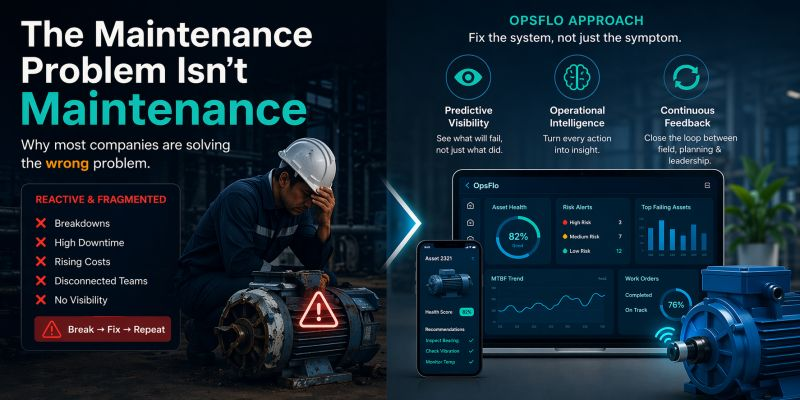
Step five: Close the loop with predictive maintenance. This is where you stop being a commodity and start being a partner. Every job you complete generates data about your equipment. A pump that runs at higher vibration levels is telling you it needs a rebuild. A truck that takes longer to reach pressure is telling you the packing is worn. If you capture that data and act on it, you prevent breakdowns before they happen.
Permian Field Case Study: The Exact Metrics That Matter
Let me walk you through a real scenario from a frac maintenance contractor operating in the Delaware Basin. This contractor runs 12 pump trucks and 4 blending units. They bill by the job for routine maintenance and repair services on the frac spread.
Before implementing a structured software system, their operation looked like this. The field supervisor collected paper tickets at the end of each day. He drove them back to the man camp, scanned them, and emailed them to the office. The office clerk spent four hours each morning rekeying the data into an Excel spreadsheet. The invoice went out on the 15th of the following month. The operator's accounts payable team rejected 22 percent of the invoices because the line items did not match the purchase order structure.
The average time from job completion to cash in the bank was 47 days. The contractor was financing operations with a revolving line of credit at 7.5 percent interest. On an average monthly billing of $480,000, the delay cost them $1,475 per month in interest alone.
After switching to a purpose-built platform with digital ticketing and direct integration to the operator's billing portal, the numbers changed dramatically. The rejection rate dropped from 22 percent to 4 percent. The average time from job completion to cash dropped from 47 days to 19 days. The office clerk no longer spends four hours rekeying data. She now spends that time chasing down the 4 percent of tickets that still have errors, which are usually caused by a crew member skipping a required field.
Here is the most important metric. The contractor started using the maintenance data from the predictive maintenance software module to schedule repairs on their triplex pumps. They noticed that Pump 7 was showing a steady increase in discharge pressure variance over a two week period. The system flagged it as a potential valve failure. The contractor pulled the pump from service on a Sunday, replaced the valve seats and springs, and had it back online Monday morning. The cost of that proactive repair was $4,200 in parts and 8 hours of labor. The alternative was a catastrophic failure mid-frac job, which would have meant a $25,000 repair bill plus a $15,000 penalty for non-productive time charged by the operator.
Case study results:
- Invoice rejection rate: Down from 22% to 4%
- Days sales outstanding: Down from 47 to 19 days
- Working capital freed up: $134,400 (based on monthly billing of $480,000)
- Interest savings per year: $10,080
- Prevented catastrophic pump failure: Saved $35,800 in repairs and penalties
That is the difference between running a maintenance business and running a maintenance operation that understands its own data.
Implementation Checklist for Supervisors and Office Dispatch
You cannot flip a switch and fix years of bad habits. Here is a practical checklist to roll out software for oilfield maintenance contractors across your crew.
First, define your job catalog. Sit down with your top supervisor and list every type of job you bill. Include the specific tasks, the standard hours, and the rate card. If you do not have a rate card, build one now. You cannot automate what you have not defined.
Second, standardize your field data entry. Create a mandatory field list for every ticket. The minimum is date, time on location, time off location, equipment ID, job type, and operator representative name. Add optional fields for notes and photos. Do not let crew members skip the mandatory fields. The software should prevent them from submitting an incomplete ticket.
Third, pilot with one crew. Pick your most reliable crew, the one that follows instructions. Run them on the new system for two weeks while the rest of the fleet stays on paper. Compare the ticket approval rates and the time to invoice. Show the results to the other crews. Crews respond to proof, not to mandates.
Fourth, train the office on exception handling. Your dispatcher and billing clerk need to know how to handle the 4 percent of tickets that get rejected. They need a clear workflow for contacting the field, fixing the error, and resubmitting. The goal is to get that rejection rate below 2 percent within 90 days.
Fifth, connect the maintenance data. Once your ticketing is clean, start feeding the equipment run hours and performance data into a maintenance module. Schedule inspections based on actual usage, not on calendar dates. A pump that runs 200 hours in a week needs different attention than one that runs 40 hours.
Sixth, review the numbers weekly. Every Monday morning, review the previous week's ticket volume, rejection rate, and average time to approval. If the numbers are not improving, find out why. Is the crew skipping the digital ticket and using paper? Is the operator's portal rejecting a specific code? Fix the root cause, not the symptom.
Frequently Asked Questions
Question: We have crews that are not comfortable with tablets. How do we get them to adopt the software?
Start with the crew lead, not the whole crew. Give that one person a tablet and show them how the digital ticket saves them from rewriting the same information three times. When they see that they can finish a job and be done with the paperwork in two minutes instead of ten, they will adopt it. Then have that lead train the next person. Peer to peer training works better than a directive from the office.
Question: How does this integrate with the operator's billing requirements like OpenInvoice or Cortex?
The right software for oilfield maintenance contractors is built to export data in the formats those portals expect. You map your job codes to the operator's service codes once. After that, the ticket data flows through automatically. You do not need to hire an IT person to manage the integration. The platform handles the translation.
Question: We bill by the job, but some jobs have standby time and travel time. How do we capture that?
The system should have separate line items for travel, standby, and active work. The crew lead enters the time they arrived on location and the time they started the active job. The software calculates the standby time automatically. You set the rules for when standby becomes billable, for example after 30 minutes. This removes the guesswork and the arguments.
Question: What is the difference between this and just using a digital field ticketing app?
A ticketing app captures the job and gets a signature. That is a good start. But the full solution also tracks your equipment health and predicts failures before they cost you a contract. The ticketing app tells you what you did yesterday. The maintenance module tells you what will break next week. You need both to run a profitable operation. Use digital field ticketing for the transaction and the predictive module for the strategy.
Clear Executive Takeaway
You are not in the business of fixing pumps or pulling wireline. You are in the business of getting paid for the work you do. The contractor who digitizes the ticket at the point of work, submits it instantly, and uses the equipment data to prevent failures will always beat the contractor who is still shuffling paper.
The numbers do not lie. A 15 percent reduction in days sales outstanding on a $500,000 monthly billing puts $75,000 back in your working capital. A predictive maintenance program that prevents one major pump failure per quarter saves you $100,000 or more in repair costs and penalty charges. That is not theory. That is the arithmetic of the oilfield.
No comments yet
Be the first to share your thoughts.
Leave a Reply
Comments are disabled on the shared-hosting build. If you want to respond to this article, email info@ops-flo.com and mention "Software For Oilfield Maintenance Contractors Who Bill By The Job".
Contact OpsFlo