


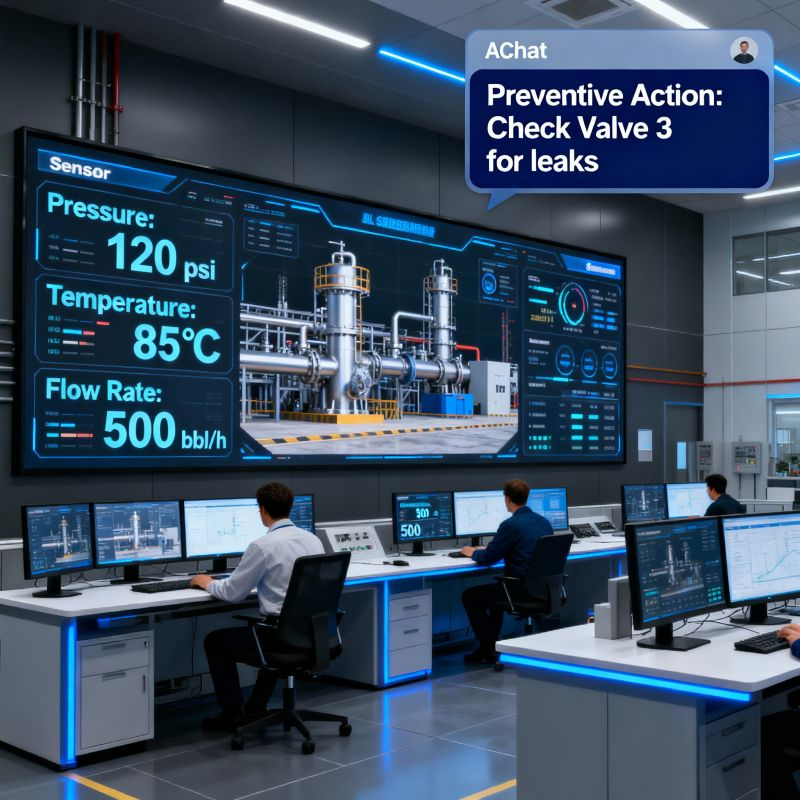
Software To Track Pipeline Inspection Compliance Across Every Mile
The hard truth: A single missed pipeline inspection on a 40-mile gathering system in the Permian Basin can trigger a $200,000 PHMSA fine. It can also shut down your entire operation for 72 hours while the company man waits for proof of compliance. You do not need more spreadsheets. You need a single source of truth that connects the inspector in the field to the compliance officer in the office.
The Core Operational Breakdown: Why Inspection Compliance Is a Data Problem, Not a Field Problem
Every mile of pipeline you operate carries a legal obligation. The Department of Transportation, through PHMSA, requires operators to inspect, test, and document the integrity of their assets on a strict schedule. The 49 CFR Part 192 rules for gas lines and Part 195 rules for hazardous liquid lines do not care if your crew was busy. They do not care if the paperwork was lost in the truck. They care about the record.
The problem in the oilfield is not the physical inspection. Your corrosion techs and right-of-way patrols do their jobs. They walk the line. They look for exposed pipe, washouts, third-party damage, and coating failures. They take notes on paper or in a basic mobile app. The problem starts when that data must be turned into a compliance record that auditors will accept.
The gap between field observation and office documentation is where violations happen. That gap is measured in days, sometimes weeks. In that time, a simple coating defect can become a leak. A missing patrol report can become a citation. The solution is not to inspect better. The solution is to track better.
You need software to track pipeline inspection compliance that works the way your field crews work. It must be simple enough for a pumper in the Bakken to use with gloved hands. It must be robust enough for a compliance manager in Houston to audit without pulling a single file folder.
The Real Financial Drain: Show Me the Math
Let me put real numbers in front of you. These are not theoretical figures from a consultant slide deck. These are the costs I have seen operators absorb when they rely on manual compliance tracking.
Consider a midstream operator running 500 miles of gathering lines in the Eagle Ford. The regulatory schedule requires quarterly right-of-way patrols and annual direct examinations on certain segments. That is 2,000 patrol events per year. Each event generates a report with GPS coordinates, photos, weather conditions, and a signature.
With paper or disconnected spreadsheets, the average time from field completion to a filed, audit-ready report is 11 days. That is 11 days where you have no defensible record. If a leak occurs on day 6, you have no proof of inspection. Your legal exposure is massive.
The arithmetic of manual tracking:
- 2,000 inspections per year x 20 minutes of office data entry per inspection = 667 hours of administrative labor.
- At $45 per hour fully loaded cost for a compliance clerk, that is $30,000 per year in pure data entry waste.
- Add the cost of rework. Typically 8% of manual reports have errors that require field re-verification. That is 160 trips back to the line at $150 per trip in truck time and labor. Add another $24,000.
- Total direct waste: $54,000 per year. That pays for a robust compliance system many times over.
The indirect costs are worse. When a PHMSA auditor finds a documentation gap, they do not just fine you. They expand the audit scope. They dig into every mile of your system. They slow down your permitting. They make your life miserable for months. One bad audit can delay a new well tie-in by 90 days. In the Delaware Basin, a new well waiting on a pipeline tie-in costs you $1,200 per day in deferred production. That is $108,000 in lost revenue from one audit finding.
The math is clear. Manual compliance tracking is not a cost-saving measure. It is a liability generator.
Why Generic Solutions and Spreadsheets Fail in the Field
I have seen operators try to solve this problem with generic project management tools. They build a spreadsheet with columns for every inspection type. They assign a responsible person. They set a due date. It works for about three weeks.
Then the realities of oilfield operations set in. A toolpusher on a swab rig in the Haynesville needs to move a unit at 2 a.m. He does not care about your compliance spreadsheet. A wireline crew is running a perforating gun and cannot stop to update a status field. A vacuum truck operator is hauling produced water and his phone has no signal in the draw.
Generic software assumes a clean, structured workflow. The oilfield is not clean or structured. It is messy, remote, and driven by exceptions. Your compliance system must handle the exception as easily as the routine.
Spreadsheets fail for a different reason. They have no concept of location. A spreadsheet row does not know that inspection point 47 is physically adjacent to a river crossing that floods every spring. It does not know that the corrosion coupon at mile 12 was last pulled in March and is now overdue. It cannot flag that the right-of-way patrol for Segment 7 was skipped because the rancher locked the gate.
You need pipeline inspection compliance software that understands geography, schedule frequency, and the reality of field work. It must be built for the person standing next to a triplex mud pump, not for the analyst in a corporate tower.
Step-by-Step Operational Framework for Compliance Tracking
Here is the framework that works. It is not complicated, but it requires discipline and the right tool.
Step 1: Define Your Asset Inventory with Spatial Accuracy
You cannot track compliance on a pipeline you have not mapped. This sounds obvious, but most operators have gaps in their GIS data. Old lines acquired from a bankrupt producer may not be in your system at all. Start by building a complete inventory of every foot of pipe you operate, including the ones you think you sold but the records are fuzzy.
Each asset must have a unique identifier. Not just a name like "Permian Main Line." It needs a segment ID, a start point, an end point, and a diameter. It needs to be tied to a specific regulatory classification. A 6-inch high-pressure gas gathering line has different inspection requirements than a 24-inch transmission line.
Step 2: Map the Regulatory Calendar to Each Asset
PHMSA does not accept a blanket "we inspect everything annually" approach. Each asset class has specific intervals. Class 1 gas lines might require leakage surveys every 5 years. Class 3 locations require surveys every 15 months. Liquid lines require inline inspection or direct assessment on a 5-year cycle. Your software must encode these rules and calculate the next due date automatically based on the last completed inspection.
Do not rely on a person to remember these schedules. The average compliance manager in the Midland basin juggles 40 different regulatory deadlines across multiple agencies. They will miss one. The software must be the memory.
Step 3: Equip Field Personnel with a Mobile-First Intake Tool
The inspector in the field does not need a laptop. They need a phone app that works offline. They need to open the assigned inspection, see the exact GPS route, and start walking. They need to take photos that are automatically geotagged and timestamped. They need to note a coating failure with a voice memo, not a typed paragraph.
The app must be fast. If it takes more than 10 seconds to open an inspection record, your crew will find a workaround. They will take a photo with their personal camera and email it to themselves. That is not compliance. That is chaos.
Step 4: Automate the Review and Approval Workflow
Once the field report is submitted, it must flow to the right reviewer automatically. The corrosion engineer reviews the direct examination data. The operations manager reviews the right-of-way patrol photos. The compliance officer signs off on the complete package.
This workflow must mirror your existing approval hierarchy. If you require a company man to approve a variance, the system must route it to them. If you use PIDX or OpenInvoice standards for vendor documentation, the system must export in that format. Do not force your team to re-enter data into a separate billing system. That is where errors creep in.
Step 5: Generate Audit-Ready Reports on Demand
When the auditor calls, you need to produce a complete compliance history for a specific segment within minutes. Not days. The report must show every inspection, every test, every repair, and every signature. It must be a clean PDF that a lawyer can review without asking clarifying questions.
This is where most operators fail. They have the data, but it is scattered across three email inboxes, two hard drives, and a filing cabinet in a trailer in Odessa. The auditor does not care about your filing system. They care about the record.
Permian Field Case Study: A 90-Mile Gathering System Operator
Let me give you a concrete example from an operator I worked with in the Delaware Basin. They ran 90 miles of sour gas gathering lines serving 45 wells. They had three corrosion techs and one part-time compliance clerk.
Before implementing a digital tracking system, their process was manual. The corrosion techs carried paper forms. They filled them out in the truck. They dropped them in a basket at the office. The clerk typed them into a spreadsheet at the end of the week. The average lag from inspection to filed report was 9 days.
In one 12-month period, they had two PHMSA audit findings. Both were for missing documentation on annual patrols. The fines totaled $85,000. The audit also triggered a requirement for additional inline inspection on 20 miles of line, which cost $120,000 in tooling and downtime.
They switched to a mobile-first compliance system. The change was not subtle.
- The lag time from field inspection to filed report dropped from 9 days to 4 hours.
- The compliance clerk was reassigned to actual field support, saving $38,000 per year in salary.
- They identified 14 overdue inspections within the first week of implementation. These were inspections that had been physically completed but never documented. The system flagged them immediately.
- At the next PHMSA audit, the operator produced a complete compliance package for all 90 miles in 45 minutes. The auditor closed the review with zero findings.
The total cost of the software was less than the fines they paid in the previous year. The return on investment was not measured in months. It was measured in days.
If you want to see what this level of tracking could save your operation, use the ROI calculator to run your own numbers. It takes five minutes and gives you a defensible figure to take to your partners.
Implementation Checklist for Supervisors and Office Dispatch
You do not need to boil the ocean. Here is a practical checklist for rolling out compliance tracking software across your operation.
- Start with a pilot segment. Pick one 20-mile section of line that has a mix of terrain, river crossings, and road crossings. Do not try to map your entire system in week one.
- Load the historical data for that segment. Input the last three years of inspection records. This gives you a baseline and helps you identify gaps immediately.
- Train the field crew in person. Do not send a link to a training video. Sit with the corrosion techs in the truck. Show them how to open the app, start a patrol, and attach a photo. Let them practice on a real segment.
- Set a 30-day parallel run. Keep the paper process for one month while the crew uses the app. Compare the results. You will find that the app captures more data and fewer errors.
- Cut the paper on day 31. Make it official. The old forms are no longer accepted. This forces adoption.
- Review the dashboard weekly. Look at the overdue list. Look at the completion rate. Look at the time from inspection to approval. If the lag is more than 48 hours, investigate why.
- Integrate with your billing system. If you use digital field ticketing for your service work, connect the compliance data to the ticket. This ensures that inspection work is billed correctly and that the compliance record is attached to the invoice. This is a cross-module benefit that saves hours of reconciliation.
The goal is not to create more work for your dispatchers. The goal is to eliminate the hidden work of chasing down missing signatures and re-typing field notes. When the system works, your office dispatch team spends their time on actual operational issues, not on data entry.
Frequently Asked Questions
What is the difference between an integrity inspection and a compliance inspection?
An integrity inspection is a physical assessment of the pipe condition. This includes inline inspection tools, hydrostatic testing, and direct examination of the pipe wall. A compliance inspection is a broader term that includes right-of-way patrols, leakage surveys, and marker post checks. Both are required by regulation, but they have different frequencies and different documentation requirements. Your tracking software must handle both types and not confuse them.
How do I handle inspections that are delayed due to weather or access issues?
The system must allow you to log a delay with a reason code and a new planned date. PHMSA auditors accept delays if they are documented and reasonable. What they do not accept is a silent gap in the record. The software should flag any inspection that is past due by more than 30 days and require a formal variance approval from a senior manager.
Can this software work with my existing GIS and SCADA systems?
A good system will import your shapefiles and asset lists from your GIS. It does not need to replace your GIS. It needs to reference the same spatial data. For SCADA, the compliance system is separate. SCADA gives you real-time pressure and flow data. The compliance system gives you the documented history of physical inspections. Both are important, but they answer different questions.
What happens when a third-party contractor performs the inspection?
Your contractor needs access to the mobile app. You can issue them a limited login that only shows the assigned segments. Their reports flow into your system with their name and credentials attached. This is critical for liability. If a contractor misses a defect and you have a leak, you need a clear record of what they inspected and what they reported. The software provides that chain of custody.
Clear Executive Takeaway
Pipeline inspection compliance is not a paperwork exercise. It is a risk management function that protects your revenue, your operating license, and your reputation. Every day you operate without a reliable tracking system, you are gambling. You are betting that the auditor will not find the gap. You are betting that the leak will not happen on the segment you failed to document.
Those are bad bets. The cost of a system is small. The cost of a violation is large. The cost of a leak on an undocumented segment is catastrophic.
You do not need to overhaul your entire operation. You need to start with one segment, one crew, and one week of disciplined use. The results will speak for themselves. Your field team will appreciate not having to fill out redundant paperwork. Your office team will appreciate not having to chase down missing reports. Your auditors will appreciate a clean
No comments yet
Be the first to share your thoughts.
Leave a Reply
Comments are disabled on the shared-hosting build. If you want to respond to this article, email info@ops-flo.com and mention "Software To Track Pipeline Inspection Compliance Across Every Mile".
Contact OpsFlo