


What Is Field Execution Software? A Plain-English Explanation
What Is Field Execution Software? The Core Operational Breakdown
If you run operations in the Permian Delaware Basin or supervise a wireline crew in the Bakken, you already know the problem. Your field crews finish a job at 2:00 AM. The ticket sits in the pickup truck until morning. Then it goes to the office. Then it waits for the company man to approve it. Then it waits for accounting to match it against the PO. Then you wait 45 days for payment.
That delay is not a paperwork nuisance. It is a direct hit to your working capital and your operational clarity. So what is field execution software in plain terms? It is a system that connects your field crews, their equipment, their tickets, and your office dispatch into one live operational picture. It replaces the clipboard, the radio call, the blurry photo of a gauge, and the spreadsheet that reconciles everything on Friday.
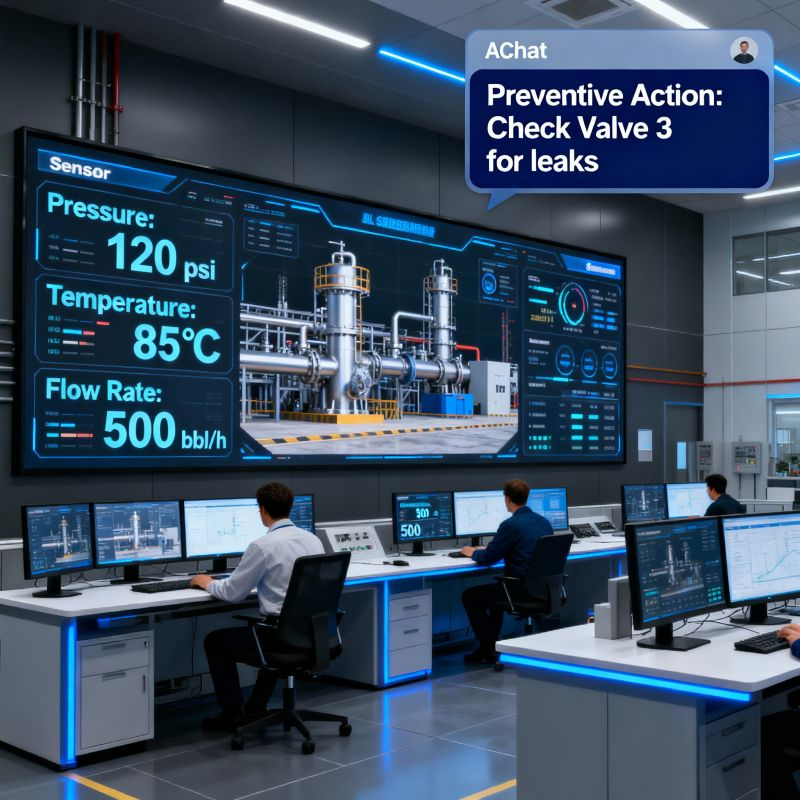
Field execution software tracks the job from the moment the dispatcher assigns the crew to the moment the invoice is approved and scheduled for payment. It captures time stamps, location data, equipment usage, fluid volumes, pressures, and ticket signatures in real time. The office sees it instantly. The customer sees it instantly. There is no second data entry. There is no version of the truth that lives only on a sticky note in a toolpusher's hard hat.
The term covers more than just digital field ticketing, although that is the heart of it. A complete field execution platform also manages job scheduling, crew dispatch, equipment status, safety checklists, and the financial handoff to billing. Think of it as the operational backbone that connects the frac manifold pressure reading to the invoice line item.
You can see a detailed breakdown of how this works in practice on the field execution platform overview, but the core concept is simple. Capture data once at the source. Use that same data for operations, for customer approval, and for billing. No rekeying. No lost tickets. No arguments over what the gauge actually read at 3:00 PM.
The Real Financial Drain: Show the Math
Let us talk about money, because that is what keeps you in business. Consider a mid-sized oilfield service company running 15 crews. Each crew completes an average of 2 jobs per day. That is 30 tickets per day, 150 tickets per week, and roughly 7,800 tickets per year.
Industry benchmarks for ticket approval cycles in the oilfield run between 14 and 30 days. The best operators using digital systems push that down to under 5 days. The difference matters because of days sales outstanding, or DSO. If your average ticket value is $4,200 and you carry 7,800 tickets a year, your gross annual ticket volume is about $32.7 million.
Now do the arithmetic on DSO. At 30 days DSO, you are carrying roughly $2.7 million of your own money to fund customer payment terms. Cut DSO to 15 days and you free up $1.35 million in cash. That is not theoretical. That is cash sitting in your checking account instead of funding the customer's operations.
The Cost of Paper Tickets
15 crews x 2 jobs/day = 30 tickets/day
30 tickets x 260 working days = 7,800 tickets/year
Average ticket value: $4,200
Annual gross volume: $32.7M
At 30 DSO, you carry $2.7M in receivables.
At 15 DSO, you carry $1.35M.
Cash freed up: $1.35M. That is a new pump or a down payment on a new wireline unit.
Then there is the cost of errors. A single incorrect tare weight on a vacuum truck ticket can cause a $1,800 dispute. A missing signature on a frac ticket can delay payment for 60 days. Disputes and rework typically eat 2 to 5 percent of revenue in the oilfield service sector. On $32.7 million in volume, that is between $650,000 and $1.6 million lost to administrative friction every year.
Non-productive time, or NPT, is another silent killer. When your dispatcher does not know that a swab rig finished early, that rig sits idle. When the office does not know a triplex pump needs a rebuild until it fails on location, you lose a full day of rig time. Field execution software gives you the visibility to redeploy assets immediately. One avoided day of NPT on a frac spread can save $150,000 or more in spread rate costs.
Use the ROI calculator to run these numbers against your own crew count and ticket volumes. The assumptions are conservative. The result will surprise you.
Why Generic Solutions and Spreadsheets Fail in the Field
Many operators try to solve this with a generic project management tool or a shared spreadsheet. It does not work. Here is why.
Spreadsheets have no concept of location. Your pumper in the Eagle Ford cannot check in from a wellsite on his phone and have that location verified against the pad coordinates. He types in a number and hopes it is right. The office has no way to verify that the crew actually arrived at the correct pad, or that they left at the time stated on the ticket.
Generic project tools are built for marketing teams and software developers. They track tasks and milestones. They do not understand a separator dump ticket or the difference between a workover rig day rate and an hourly wireline charge. They cannot compute a blended rate for a frac job that used 4,200 barrels of water and 340,000 pounds of sand.
The deeper problem is the approval workflow. In the oilfield, the company man on location is the authority. He signs the ticket. But he is not in the office. He is standing next to the wellhead covered in mud. A generic tool requires him to log into a web portal, find the right job, and click approve. That is not going to happen at 2:00 AM.
Field execution software is built for the reality of the oilfield. The company man gets a text message with a link. He taps it. He sees the ticket exactly as it was written on location. He signs with his thumb. The ticket is approved and sent to billing before the crew has even finished rigging down.
This also matters for integrations. Your accounting team likely uses OpenInvoice, Cortex, or PIDX standards to receive invoices from major operators. A spreadsheet cannot generate a compliant PIDX 821 file. Field execution software can. It formats your invoice correctly the first time, so it does not get rejected and sent back for another 14 day cycle.
Step-by-Step Operational Framework
Implementing field execution software is not a software project. It is an operational change. Follow this framework to get it right.
Step 1: Map Your Current Ticket Flow
Draw the path of a single ticket from your crew to payment. Identify every handoff, every delay, and every place where data is re-entered. Most operators find 6 to 10 touchpoints. Each touchpoint is an opportunity for error and delay.
Step 2: Standardize Your Service Catalog
Define every service you sell with a clear code, a unit of measure, and a default rate. If you run a swab rig, define the hourly rate, the standby rate, and the travel charge. If you run a frac spread, define the pump down rate, the sand rate, and the chemical additive rate. This catalog becomes the backbone of your tickets and your invoices.
Step 3: Equip Your Field Supervisors
Your company men and crew chiefs need a mobile app that works offline. The Permian has dead zones. The Haynesville has trees that block satellite signals. The app must cache data locally and sync when connectivity returns. If it does not work offline, your crews will abandon it within a week.
Step 4: Configure Approval Workflows
Decide who approves what. For small tickets under $5,000, the company man approves on location. For larger tickets, the office may require a secondary approval. Set up automatic routing so the right person gets the right notification at the right time.
Step 5: Connect Billing and Invoicing
Once a ticket is approved, it should flow automatically into your billing system. No rekeying. No reformatting. The system should generate the invoice, send it to the customer through the correct portal, and track the payment status.
This last step is where most operators see the biggest DSO reduction. By integrating ticket approval directly with accelerated oilfield billing, you eliminate the 3 to 5 day lag between job completion and invoice submission.
Permian Case Study: Exact Metrics
Let me give you a concrete example from a client operating in the Permian Delaware Basin. This company runs 8 frac spreads and 12 workover rigs. They were using paper tickets and a manual Excel billing process.
Their baseline was painful. Ticket approval took an average of 19 days. DSO was 47 days. They had a 4.2 percent error rate on first pass invoices, meaning nearly 1 in 20 invoices was rejected by the customer for a data mismatch. Their accounts receivable team spent 60 percent of their time chasing discrepancies and reissuing invoices.
They implemented a field execution platform over a 6 week period. The results after 90 days were measurable.
Permian Operator Results After 90 Days
Ticket approval time: 19 days down to 4 days
DSO: 47 days down to 32 days
Invoice error rate: 4.2% down to 0.7%
Accounts receivable team time on discrepancies: 60% down to 15%
Annual revenue: $84 million
Cash freed by DSO reduction: $3.5 million
The DSO reduction alone freed $3.5 million in working capital. That paid for the software implementation hundreds of times over in the first quarter. The error rate reduction saved an estimated $290,000 in rework and dispute resolution costs annually.
The operational benefit was just as important. The dispatcher could see in real time that a workover rig in Ward County had finished its job at 3:30 PM. Instead of sitting idle until the next morning, the rig was reassigned to a standby job 20 miles away. That single redeployment added 4.5 hours of billable time that would have been lost.
Multiply that by 20 rigs and 12 spreads, and the utilization gains become a significant revenue driver.
Implementation Checklist for Supervisors and Office Dispatch
You do not need a consultant to implement this. You need a clear checklist and the discipline to follow it.
- Audit your current ticket cycle. Measure the average time from job completion to invoice submission. Write it down. This is your baseline.
- Identify your top 5 services by revenue. Define their rate structures and units of measure in the system first.
- Create a digital service catalog with clear codes. Test it with your field supervisors before rolling out to all crews.
- Run a pilot with one crew or one district for 2 weeks. Gather feedback on the mobile app usability and ticket accuracy.
- Train your company men and crew chiefs on the approval workflow. Show them how to sign a ticket in under 30 seconds.
- Configure your billing integration. Test with a single test invoice before going live.
- Set a go live date. Communicate it clearly to all field and office staff.
- Track your DSO and ticket approval time weekly for the first 90 days. Compare against your baseline.
- Review error rates monthly. Investigate any ticket that requires manual correction.
The most common failure point is not the software. It is the office staff that continues to rekey data out of habit. Enforce the new process. The system only works if you trust it.
If you want a structured assessment of your current operation, request a revenue diagnostic. It will show you exactly where your revenue is leaking.
Frequently Asked Questions
What is field execution software and how is it different from regular accounting software?
Accounting software records what happened after the fact. Field execution software captures what is happening right now, at the wellsite, before it becomes a historical record. It is the difference between reading yesterday's weather report and looking at the radar. The accounting software needs a clean invoice to process. Field execution software makes sure that invoice is clean by capturing accurate data at the source.
How long does implementation take for a typical oilfield service company?
Most operators go live in 3 to 6 weeks. The timeline depends on the number of service lines you offer and the complexity of your rate structures. A company running only vacuum trucks can be live in 2 weeks. A company running frac spreads, wireline, and coil tubing with complex blended rates may need 6 to 8 weeks. The key is to start with your highest volume service line and expand from there.
Will my company men actually use this in the field?
Yes, if you make it easier than the paper process. The mobile app must allow them to create a ticket in under 2 minutes. It must work offline. It must capture a signature with a thumbprint. If the app is slow or clunky, they will abandon it. If it is faster than writing on a carbon copy, they will adopt it within days. The key is to involve them in the pilot and listen to their feedback before full rollout.
What about integration with OpenInvoice and Cortex?
A proper field execution platform generates invoices in the format required by the customer's portal. Whether they use OpenInvoice, Cortex, or a proprietary PIDX system, the software should format and submit the invoice automatically. This is where you eliminate the manual portal entry that causes so many delays. Ask your vendor for specific integration capabilities before you commit.
Clear Executive Takeaway
The oilfield runs on tickets. Every barrel of oil, every foot of hole, and every pound of sand is ultimately represented by a piece of paper or a digital record that says work was done and money is owed. The companies that control that record control their cash flow.
Field execution software is not a luxury for the large integrated service companies. It is a competitive weapon for any operator who wants to cut DSO, reduce errors, and redeploy assets faster than the competition. The math is simple. The technology is proven. The only question is whether you will act this quarter or next.
Start with a clear understanding of your current ticket cycle. Measure your DSO. Count your invoice errors. Then look at a digital field ticketing system that can change those numbers. The Permian operator I described freed $3.5 million in 90 days. Your operation can do the same.
No comments yet
Be the first to share your thoughts.
Leave a Reply
Comments are disabled on the shared-hosting build. If you want to respond to this article, email info@ops-flo.com and mention "What Is Field Execution Software? A Plain-English Explanation".
Contact OpsFlo