

Short Pay Reconciliation for Oilfield Field Tickets
The direct answer: A short pay is a remittance that arrives smaller than the invoice it settles. The operator accepted the field ticket and paid it anyway, just not in full, and usually without an explanation attached. Reconciliation is the weekly habit that catches the gap while you still have time to dispute it.
- A short pay is not a rejection. The ticket was accepted. The payment was cut.
- Most short pays trace to one of five causes: a rate mismatch, a quantity dispute, disallowed standby time, a tax or unit error, or a ticket already settled once.
- Reconciliation works line by line, against the original signed ticket, not against the invoice total.
- A weekly cadence keeps every short pay inside the dispute window most operators allow.
- A reason code on every short pay tells you what to fix in your process, not just what to chase this month.
What a short pay actually is
A short pay is a remittance for less than the invoiced amount, issued against a field ticket the operator already accepted into its accounts payable system. It is a different failure than a rejection. A rejection stops a ticket before payment. A short pay lets the ticket through and adjusts the dollars on the way out, often with a code in the remittance detail and sometimes with no explanation at all.
The oil and gas industry's own data standards body, PIDX, publishes a formal vocabulary of invoice response codes that most large operators' accounts payable systems use under the hood (PIDX Invoice Response usage guideline). Short pays are not random. They follow a short, repeatable list of reasons, which is exactly why they can be checked for before you ever submit the ticket, and reconciled fast after you get paid.
Why operators short pay instead of rejecting outright
Accounts payable teams run on volume. Ardent Partners' State of ePayables research puts the average invoice exception rate across all industries at 18.4 percent in 2025, with the best-performing AP teams running an exception rate of 11.1 percent against 20.9 percent for everyone else (Ardent Partners, State of ePayables 2025). Rather than kick every imperfect invoice back for a full resubmission, many systems and reviewers take the path that clears the invoice fastest: pay the part that is clean, cut the part that is not, and move on. Your office rarely hears why.
The consulting firm Trenegy documented one case where a large oilfield services company's days sales outstanding had climbed to 76 days with billing errors running at 30 percent. Fixing the bid-to-bill process, including regional price books that kept rates consistent across every crew, brought DSO down to 30 days and cut billing errors to 10 percent (Trenegy, on the bid-to-bill process). The fix was not a better argument with the operator's AP team. It was removing the inconsistency that gave them a reason to cut the check.
The five reason codes worth tracking
You do not need fifty categories. A small, consistent list, applied every time, turns a pile of partial payments into a pattern you can act on.
- Rate mismatch. The line was billed at a rate that does not match the operator's current price book or master service agreement.
- Quantity or unit dispute. Hours billed against a day rate, or a quantity the operator's system reads as exceeding the purchase order.
- Standby disallowed. Non-productive or standby time paid at zero or a reduced rate because it was not preapproved in the format the operator expects.
- Duplicate or already-settled ticket. The same work, keyed or submitted twice, and the second payment reduced or withheld.
- Tax, rounding, or unit-of-measure difference. Small, mechanical differences that are easy to miss and easy to prove once you line up the ticket against the remittance.
The three-line check every remittance needs
Reconciliation does not need new software to start. It needs three numbers, lined up, every time a remittance lands.
Step 1: Pull the original ticket amount
Start from the signed field ticket, not the invoice summary. The ticket carries the quantities, the rate, and the approver's signature. That is the number you are checking the payment against.
Step 2: Match it to the paid amount, line by line
Compare the remittance to the ticket at the line-item level, not the invoice total. A short pay on one line can hide inside an invoice where every other line paid in full. Checking totals only misses it.
Step 3: Assign a reason code before you file it
Every gap gets one of your five codes before it is closed out, disputed, or written off. A short pay with no reason code is a short pay you cannot learn from.
Build a weekly reconciliation habit
Monthly reconciliation is too slow. Most operators run a dispute window measured in weeks, not months, and a short pay you catch in week one is far easier to recover than one you notice during quarter-end close. A controller checking remittances weekly, against open tickets, catches a short pay while the company representative who signed the original ticket still remembers the job.
Set a standing weekly block, even fifteen minutes, to run the three-line check against every remittance received that week. Log the reason code regardless of whether you plan to dispute it. A short pay you decide not to fight is still data. If rate mismatch is your biggest bucket three months running, the fix is not a stronger invoice. It is getting the current contract rates into whatever creates your field tickets.
What changes when the ticket and the invoice live in one record
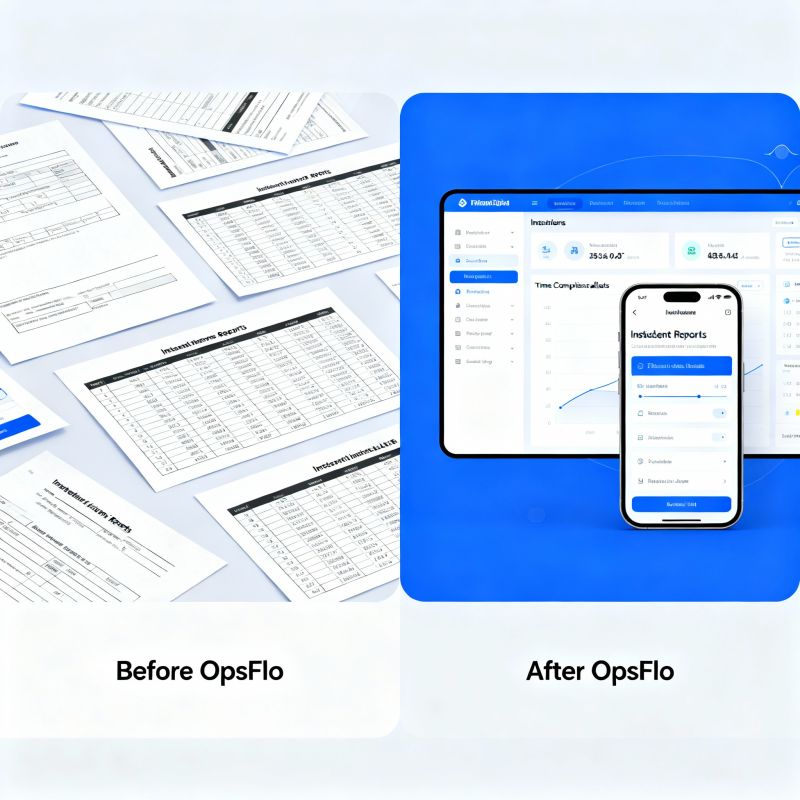
The slow part of reconciliation is rarely the math. It is finding the original signed ticket that matches a remittance line from six weeks ago, buried in a different folder, a different format, or a different person's inbox. When the field ticket, the rate book, and the invoice sit in one record from the start, matching a remittance line back to its ticket is a lookup, not an afternoon lost to two spreadsheets. The reason codes also accumulate automatically in one place, which is what makes the monthly pattern visible instead of anecdotal.
Frequently asked questions
How is a short pay different from a rejected field ticket?
A rejection stops a ticket before any money moves, usually for a mechanical reason like a missing signature or an invalid purchase order. A short pay lets the ticket through and reduces the payment on one or more lines, often without an upfront explanation. Both need tracking, but they need different fixes.
How long do I have to dispute a short pay?
It depends on the operator's master service agreement and accounts payable policy, and windows vary by company. The practical rule is to check every remittance against its ticket the week it arrives, because the dispute clock is running from the payment date whether or not you have noticed the gap.
What is a reasonable short pay reconciliation cadence?
Weekly, tied to your remittance schedule, works for most field service companies. Monthly reconciliation still catches the money, but it pushes disputes closer to or past the window operators allow, and it separates the review from the people who remember the job.
Can a short pay be prevented before I submit the ticket?
Many can. A ticket priced from a current rate book, coded to the right cost object, and signed before it leaves the site removes three of the five most common reason codes before the operator ever sees it. Prevention and reconciliation work together: one shrinks the problem, the other catches what is left.
The takeaway
A short pay is recoverable money sitting in plain sight on a remittance you probably already have. The companies that get it back are not the ones with the strongest argument. They are the ones who check every line, every week, against the original ticket, and write down why the gap happened. Do that for a quarter and the five reason codes will tell you exactly which part of your billing process to fix first.
See how field tickets, rate books, and invoices come together in one record on the OpsFlo invoicing and billing platform, or run your own numbers on the ROI calculator.
No comments yet
Be the first to share your thoughts.
Leave a Reply
Comments are disabled on the shared-hosting build. If you want to respond to this article, email info@ops-flo.com and mention "Short Pay Reconciliation for Oilfield Field Tickets".
Contact OpsFlo